
We didn't build Holy Havana as a music channel.
We built it as a laboratory.
The question we were actually trying to answer: Can a fully AI-produced short-form content engine — AI music, AI video, zero ad spend, no existing audience — generate real, measurable traction on YouTube? And if it can, what are the exact mechanics that make it work?
The answer, six months and 9,900 monthly viewers later, is yes. But not for the reasons most agencies think.
Here's what the data actually showed us.
We Killed Our Best-Performing "Viral" Video on Purpose
And it was the best decision we made all year.
Here's the video in question: a repurposed snippet of a sleeping cat, wrapped in a relaxing audio track, published to our channel with a thumbnail targeting the insomnia and sleep-aid audience. Smart cross-category play, right? Tap a huge adjacent audience. Easy views.
Zero meaningful subscriber conversions. Confused algorithm behavior on every video that followed. The click count looked fine. That was the trap.
But the click count looked okay at first glance. Not embarrassing. So the instinct is to leave it. Let it run. Move on.
We didn't. We unlisted it within weeks.
Why this matters for your clients: YouTube — and TikTok, and Reels — now builds what functions as a channel trust score. Every upload either reinforces or dilutes the algorithm's understanding of who your audience is. One misaligned video doesn't just underperform. It sends a false signal that attracts the wrong viewers to subsequent videos. Those viewers bounce. Those bounces register as dissatisfaction signals. That dissatisfaction suppresses recommendation reach — on videos that would otherwise be performing.
The lesson isn't "be consistent." Every agency says that. The lesson is more surgical: inconsistency has a quantifiable, cascading tax. It doesn't just hurt the off-brand post. It puts a ceiling on the compliant content around it.
When we unlisted the cat video, performance on neighboring content recovered.
"We killed a 'viral' video on purpose. It had decent clicks. But 19% retention was poisoning our algorithm's understanding of our channel. Within weeks of unlisting it, surrounding videos recovered. One bad post doesn't just underperform — it taxes everything else. That's the part no one tells you about content consistency."
The Six-Word Rewrite That Nearly Doubled Our Click Rate
We ran the same song with three different titles.
| Title Type | Approach | CTR | |
|---|---|---|---|
| Thematic statement | Abstract concept framing | ~1% | |
| Named wound | "He Got Laid Off — But There Was a Better Plan" | 8.42% | |
| Named wound (Spanish) | "Lo Despidieron — Pero Tenía Otro Plan" | 15.73% |
Same song. Same video. Same thumbnail format. Completely different packaging.
The single most reliable predictor of short-form performance across our entire dataset: whether the title named a specific human pain in the first five words.
This is not a headline-writing tip. It's a structural principle about where content starts and where products belong.
Your client's product is not the hook. The audience's pain is the hook. Your client's product is the resolution — that's where it earns its place.
In both columns, you tell the same story. Only one of them starts where the audience actually is.
"We ran the same video three times with different titles. CTR went from 1% to 8.42% to 15.73%. The only change? Whether the title named a specific human pain in the first five words. Product-first titles die. Wound-first titles win."
The 5-Beat Architecture Behind Every High-Performing Short
Across every video in our dataset that outperformed benchmarks, the same underlying structure appeared — regardless of content category. We didn't design this structure. We discovered it by analyzing what worked.
Every deviation from this structure underperformed. When we returned to it, performance recovered.
Why this matters for agencies: Most brands treat short-form as compressed advertising. The data says short-form behaves like micro-screenwriting. The same structure that drives a three-act feature drives a 30-second Short — just compressed. The brands winning in the feed are not the ones with bigger budgets. They're the ones with better story architecture.
The Spanish Insight Nobody's Talking About
15.73% CTR. That was the Spanish version. The English equivalent: 8.42%. Same song. Same visual structure. Same 5-beat architecture. The Spanish version nearly doubled click performance.
This was not a fluke. Across our dataset, Spanish-language Shorts consistently delivered higher click-through rates on a smaller but more deeply engaged impression base.
Seventy-four percent of our total audience was international. We had optimized for English. The data corrected us.
The more precise claim: translated Spanish content performs reasonably. Spanish content originated in that emotional register performs at a different level entirely. The wound has to be in the language it was actually felt in.
"The Spanish-language short-form audience is underserved and overdelivers when content is originated in that cultural register — not translated. That's a different brief, not a localization job."
We Hit 95.97% Average View Percentage. Here's What That Number Actually Means.
Not the view count. The percentage.
One of our best-performing Shorts hit 95.97% average view percentage — meaning nearly every person who started it watched to the end. Meanwhile, a video with far more total views logged 37% retention. By every traditional metric, the second video "outperformed" the first.
In reality, the second video was a liability.
YouTube, TikTok, and Reels have all shifted from maximizing clicks to maximizing what YouTube now calls Quality Click Ratio — the proportion of viewers who felt the content delivered on its packaging promise. High CTR with low retention is now a negative signal. The platform reads it as: "We sent people to this content. They didn't want it. We'll show it less."
| Metric | Old model | 2025–26 algorithm |
|---|---|---|
| Primary signal | View count | Average % viewed |
| Secondary signal | Subscriber growth | Returning viewer rate |
| High CTR + low retention | Rewarded (more impressions) | Penalized (suppressed reach) |
| Off-brand content | Neutral (isolated performance) | Cascading tax on all videos |
The metric your agency should be reporting to clients is not views. It is average percentage viewed. A 30-second Short with 90% retention is worth ten times a 60-second Short with 40% retention. The number that predicts channel growth is returning viewer rate — not impressions.
One Live Stream Outperformed Six Weeks of Short-Form
We published consistently for months. Shorts were the engine. Then one live stream generated 206 watch hours — 43% of the channel's total watch hours for the entire 28-day period.
The mechanism was specific: a viewer shared the live stream link into a WhatsApp group at 11PM. Concurrent viewers spiked from 3–8 to 25+ and held through the night.
The lesson is architectural, not tactical:
If you're running a short-form strategy without a live or long-form anchor — a series, a podcast, a live stream, a deep-dive episode — you're building audience without building retention. You're filling a leaky bucket.
The 150-Pixel Test Your Creative Team Is Probably Skipping
59.7% of our total watch time came from mobile phones. When we designed thumbnails for desktop and then checked them at 150 pixels — the size a mobile viewer sees a thumbnail while scrolling — critical text was unreadable and emotional hooks were invisible.
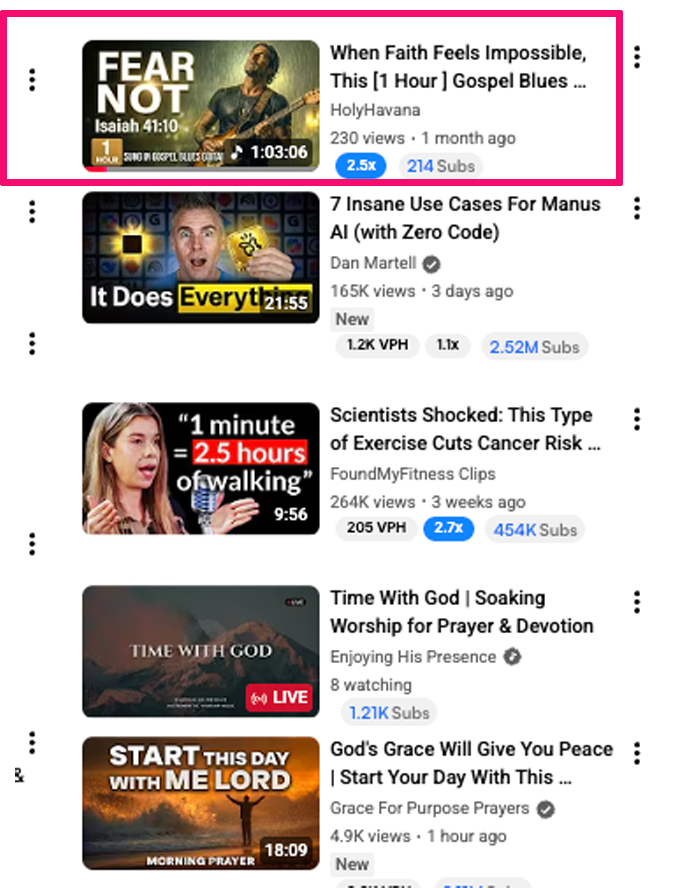
Every Short thumbnail should be evaluated at 150px before it publishes.
The Microdrama Market Is Moving Faster Than Most Agencies Are Briefing
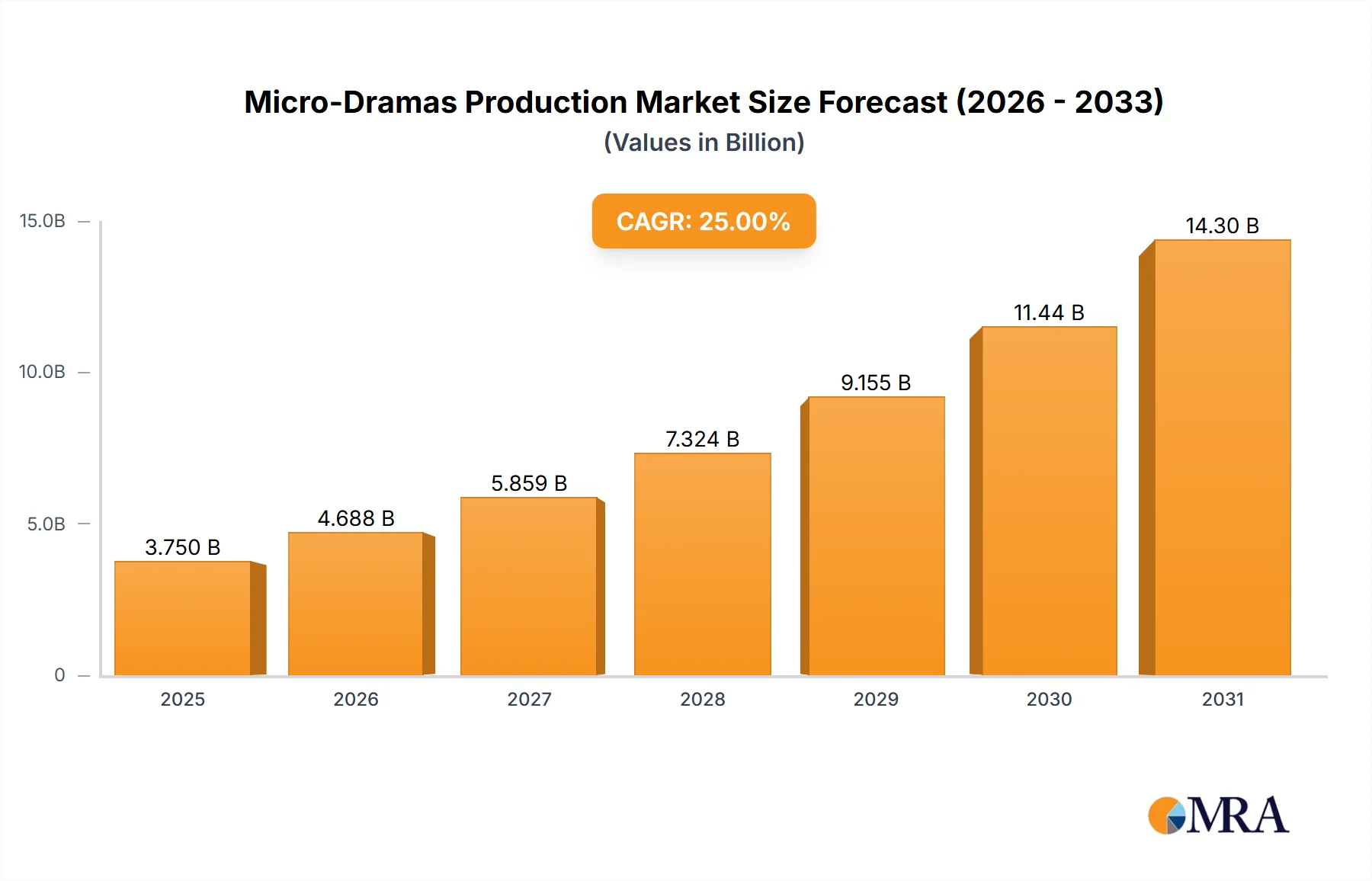
US microdrama platform downloads are on track to hit 85 million this year, doubling annually for five consecutive years. Apps like GoodShort and DramaBox are pulling 35 minutes per user per day — more than Netflix's 25 minutes. Range Media Partners and Google launched a dedicated microdrama division in 2026, backed by premium Hollywood talent.
For agencies, this represents an inventory opportunity that doesn't exist yet inside traditional spot production: branded integration inside narrative arcs, not between them. Character-driven brand moments that function as story beats. Serialized branded universes in fashion, beauty, CPG, automotive.
The brands that figure out how to operate in this space in the next 18 months will own it. The brands that wait for the format to mature will be buying inventory at a premium.
"Americans now spend more time watching microdramas on their phones than on Netflix. The brands that crack narrative-integrated placement inside these episodes — not pre-roll, not mid-roll, inside the story — will own a format that doesn't have an established rate card yet. That window closes."
The Bottom Line
Six months. 50+ uploads. 9,900 monthly viewers. 731% subscriber growth in a single 28-day window. Built on zero ad spend, no existing audience, and a fully AI-generated content workflow.
- 01Wound-first packaging — name the specific human pain before anything else
- 025-beat story architecture — every deviation underperformed; every return recovered
- 03Retention as the primary metric — not views, not impressions, not followers
- 04Content identity as an algorithmic asset — one off-brand video has a measurable cost
- 05Short-form + live as a system — neither works as well alone
- 06Spanish-language origination — not translation; a different brief entirely
- 07150-pixel mobile production standards — applied consistently, not aspirationally
- 08Microdrama as the next inventory layer — the window to own this format is open now
None of this required a bigger team, a larger budget, or a new platform. It required a different architecture.
The agencies and entertainment companies that will own short-form in the next 24 months aren't the ones with the most content. They're the ones who understand that the algorithm has become a collaborator — and they're building their creative systems to work with it.